
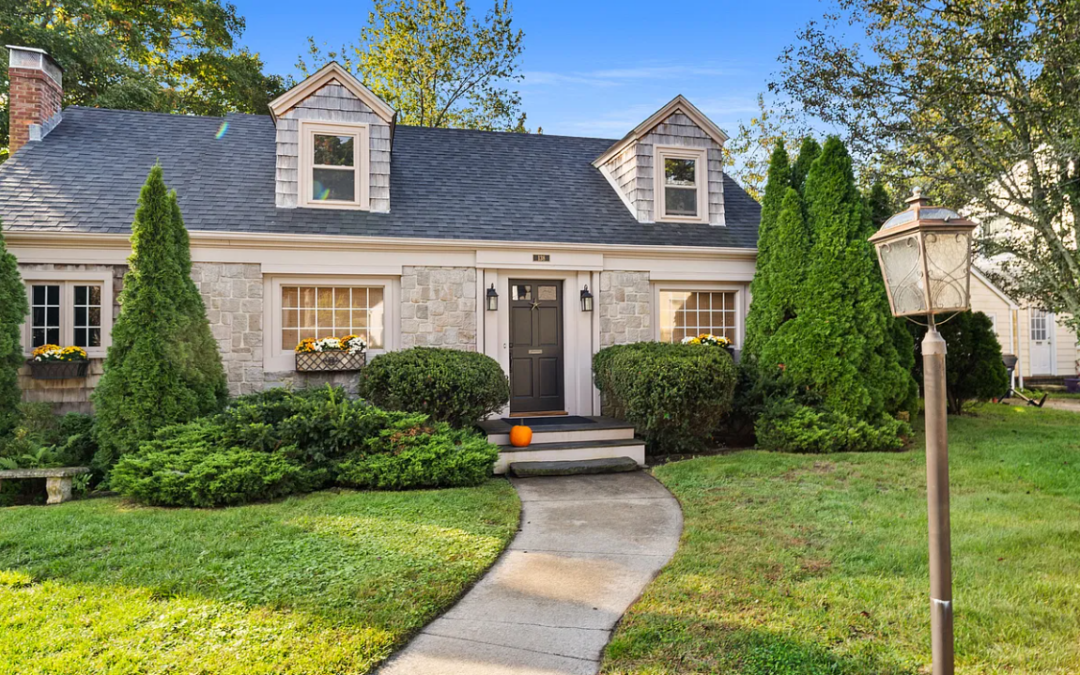
If you want to sell your house fast in Rhode Island, the single most important number is not the sale price. It is the net proceeds: what lands in your bank account after every cost is paid. A listed home and a cash offer can yield very different net outcomes, even when the cash price appears lower on paper. Understanding every line item in both scenarios gives you the tools to make that comparison for yourself.
Rhode Island has its own cost structure that can affect sellers differently than in other states. It is customary to have an attorney involved at closing, transfer taxes generally fall on the seller, and commissions still represent a significant share of any listed sale. Before you choose a path, you need to know what each one may cost.
Every Cost a Rhode Island Seller Pays When Listing With an Agent
A traditional MLS listing comes with a long list of costs that arrive at different stages of the sale. Some hit before the home goes on the market, some surface during the inspection period, and the rest land at the closing table.
Pre-Listing Costs
Getting a home ready for the market costs money before a single buyer walks through the door. Pre-listing repairs are often the largest variable. A buyer’s home inspector will flag any deferred issues, and sellers who address issues up front tend to receive cleaner offers. Depending on the property’s condition, these costs can range from minor cosmetic touch-ups to several thousand dollars for items such as HVAC service, roof repairs, or updated electrical panels.
Staging and photography are separate line items. Some agents cover photography as part of their service, but staging is often paid by the seller.
Commission and Closing Day Costs
Agent commissions are typically the largest closing cost in a listed sale. The seller often pays the listing agent’s fee, and in many transactions a buyer’s agent fee is negotiated as well. Commission structures have shifted in recent years, so amounts are now more openly negotiated. A combined commission in the range of 4% to 6% of the sale price is still common. On a $350,000 home, that is $14,000 to $21,000 paid directly from your proceeds.
It is customary in Rhode Island to have a real estate attorney handle the closing. Attorney fees vary, and this fee generally covers title review, closing document preparation, and the legal transfer of the deed.
Rhode Island’s real estate transfer tax is generally paid by the seller. The rate is $2.30 per $500 of the sale price, or a fraction of that amount. On a $350,000 sale, that comes to approximately $1,610. Some municipalities may also levy a local conveyance tax, which can add to this amount. Confirm the current rate with your closing attorney.
Title insurance on the seller’s side is sometimes required and sometimes negotiated. Owner’s policy costs vary, but sellers frequently contribute to title-related fees. Prorated property taxes also adjust at closing based on the closing date, which can mean you owe the buyer a credit if taxes have not yet been paid for that portion of the year.
Seller concessions are another variable. Buyers in competitive markets often ask sellers to cover a portion of their closing costs, particularly when the buyer is using financing.
Inspection and Negotiation Costs
After the inspection, buyers typically submit a repair request or ask for a price reduction. Even a home in good condition often requires some concession during this phase. A buyer who discovers $6,000 in issues may ask for a $5,000 price reduction. This cost is less visible than a line item at closing, but it directly reduces your net proceeds.
Every Cost a Rhode Island Seller Pays in a Cash Home Sale
A cash sale to a direct buyer like Sell My House Easy Fast works differently. Many of the cost categories from a listed sale may shrink significantly or disappear.
Agent commission is typically not part of a direct cash sale. That single difference can preserve $14,000 or more in proceeds on a mid-range Rhode Island property. Staging, professional photography, and pre-listing repairs are generally not required, since cash buyers can purchase homes in their current condition. That means you are not writing checks before the buyer ever sees the property.
Selling your house as-is can eliminate much of the inspection-and-negotiation cycle. There may be no repair request, no buyer credit for the water heater, and no last-minute price reduction because an inspector found something in the crawl space.
Closing costs in a cash transaction are often lower. Attorney fees may still apply, but a simpler transaction can sometimes keep them toward the lower end. Transfer tax is generally still owed by the seller because it is a statutory obligation tied to the transaction, not to the type of buyer. However, some cash buyers offer to cover some or all of the seller’s closing costs as part of the deal, so this is worth clarifying upfront.
There are no financing contingencies and no appraisal gaps to navigate, which reduces the risk of the deal falling through because a lender declined the buyer. That reduction in deal risk has a real dollar value that is easy to overlook when comparing offers on paper.
How Carrying Costs Change Your Net Proceeds the Longer Your Home Sits
This is the cost category most sellers underestimate. Every month a home sits listed on the market, the seller continues paying to own it. These carrying costs accumulate quietly and can eliminate the price difference between a cash offer and a listed sale.
What Carrying Costs Actually Include
Mortgage payments are the most obvious. If you owe $1,400 per month on your current mortgage and the home takes four months to go from list to close, that is $5,600 in mortgage payments made on a home you are trying to exit. Taxes, homeowners insurance, and HOA fees (if applicable) continue to accrue at the same time.
Utilities are another real expense. A vacant home still requires heat, electricity, and water to stay presentable for showings and to prevent damage during Rhode Island winters.
A Realistic Comparison
Say a Providence homeowner receives a cash offer of $320,000 and is also weighing a listed sale with an estimated market price of $355,000. On the surface, the listed sale looks better by 35,000. But after subtracting a 5% commission (17,750), attorney fees ($600), transfer tax (approximately 1,633), seller concessions of 2% (7,100), pre-listing repairs (4,000), staging and photography (1,500), and four months of carrying costs including mortgage, insurance, taxes, and utilities ($7,200), the listed sale nets roughly $315,000 or less. The cash offer, with minimal closing costs and no carrying costs, may net between $316,000 and $318,000, depending on the terms.
These figures are illustrative only. The exact numbers shift with every home, every market condition, and every negotiation. But the exercise reveals something important: the gap between a cash offer and a listed price is often not as wide as it appears before costs are accounted for.
When the Listed Sale Still Wins
A cash offer is not always the stronger net outcome. If your home is in excellent condition, priced well for the current market, and you have time to go through a full listing process, the higher sale price may still produce a better net even after all deductions. The math depends on your specific cost inputs, your local market, and how long your home realistically takes to sell.
Deciding how to sell your house fast in Rhode Island is ultimately a math problem, not a gut decision. Build your own comparison using the cost categories above, fill in your real numbers, and see which path actually produces more money in your hands. Whether that leads you to list traditionally or sell your house as-is to a direct cash buyer, the decision should come from your numbers, not from assumptions about which option is automatically better. Sell My House Easy Fast is here for sellers who run that math and find that a cash offer fits their situation. Either way, you now have the framework to figure it out.
Frequently Asked Questions
Do Rhode Island sellers have to pay transfer tax on a cash sale?
Transfer tax in Rhode Island is generally a seller obligation tied to the transfer of property, not to the type of financing the buyer uses. Cash sales are typically subject to the same rate of $2.30 per $500 of the sale price. Some cash buyers offer to credit seller closing costs as part of the offer terms, which can offset this expense, but the tax itself does not disappear.
What is the highest hidden cost in a traditional Rhode Island home listing?
Carrying costs and post-inspection concessions are two expenses sellers often underestimate. The mortgage, insurance, taxes, utilities, and upkeep that continue accruing while the home sits listed can add up to thousands of dollars that never appear on a closing disclosure but still reduce what you net from the sale.
Is the Rhode Island real estate attorney fee the same in a cash sale and a listed sale?
Attorney involvement is customary in both transaction types. The fee in a cash transaction may be toward the lower end of the typical range because the transaction can involve fewer contingencies and less complexity. In a financed sale, the closing process is often more involved, which can push fees higher.